Alberta’s Energy Future: What the Renewable Moratorium Really Delivered
By Taking Alberta Forward

Introduction:
Since Alberta imposed its moratorium on new renewable energy projects in August 2023, many Albertans have wondered: Did pausing wind and solar help or hurt our power bills? The short answer: Costs peaked in 2023, then came down thanks to new natural gas plants — but Alberta still pays some of the highest electricity rates in Canada. A smarter path forward isn’t “renewables only” or “gas only.” It’s a balanced mix that plays to Alberta’s strengths.
The Record Since the Moratorium:
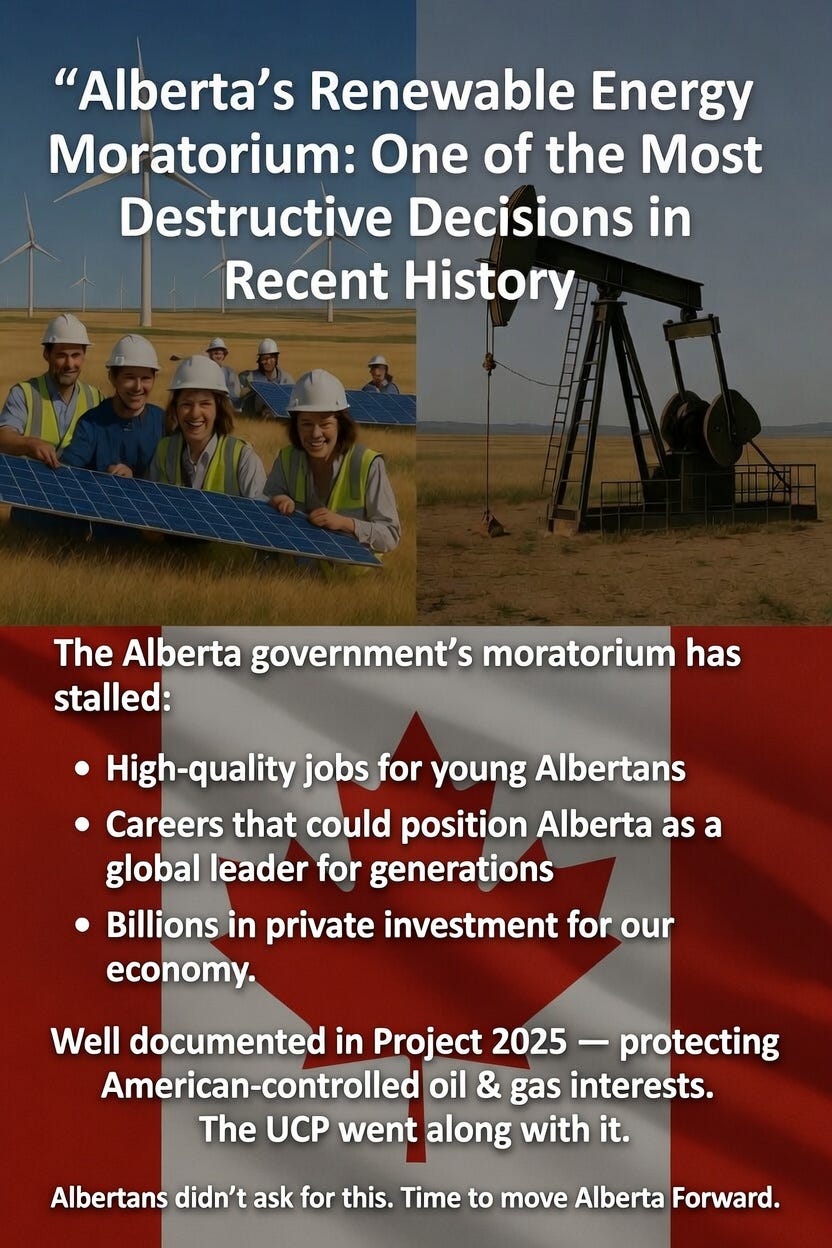
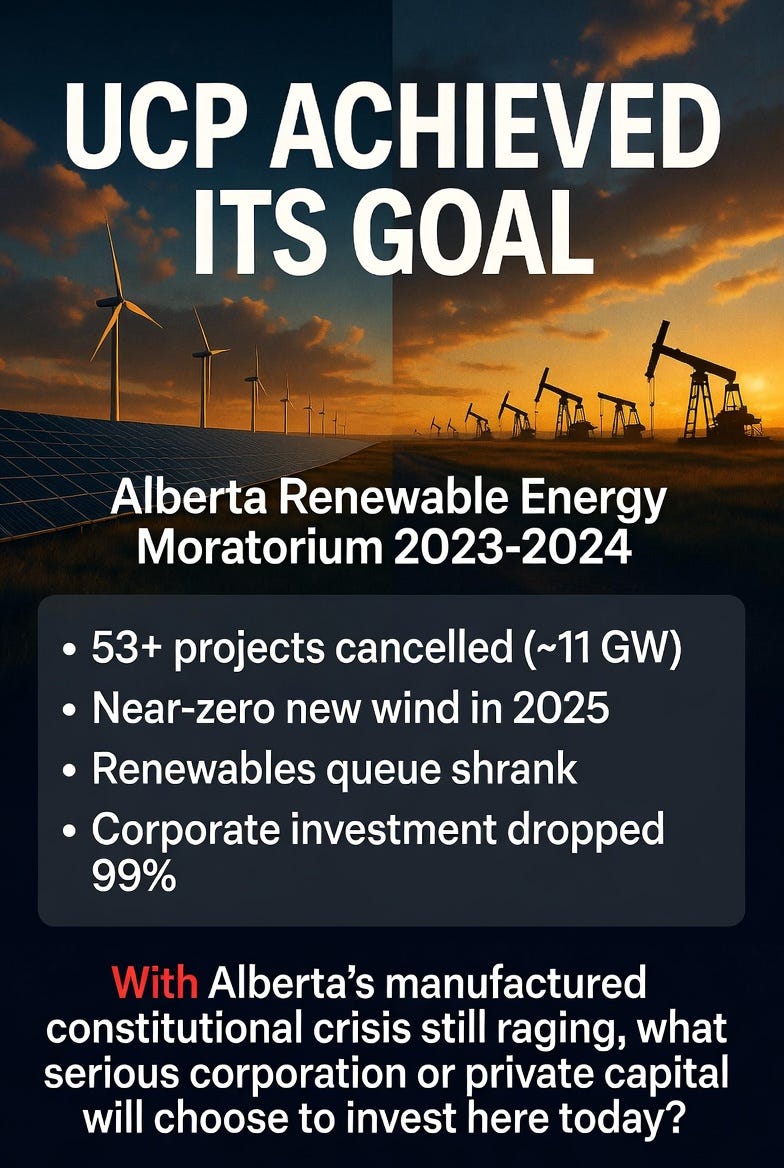
· The pause (Aug 2023 – Feb 2024) stopped approvals for large new wind, solar, and geothermal projects.
· Residential electricity rates hit highs in 2023 amid market volatility.
· Rates stabilized and dropped in 2024–2025 as over 2,700 MW of new natural gas capacity came online. Default regulated rates now sit around 12¢/kWh for the energy portion in 2025–2026.
· However, all-in bills (energy + delivery + transmission + riders) remain high.
How Alberta Compares to the Rest of Canada (approximate all-in residential rates):
· Quebec: ~7.8¢/kWh → ~$78 per month (1,000 kWh)
· Manitoba: ~10.6¢/kWh → ~$106 per month
· British Columbia: ~11.0¢/kWh → ~$110 per month
· Ontario: ~14.1¢/kWh → ~$141 per month
· Alberta: ~25.8¢/kWh → ~$258 per month
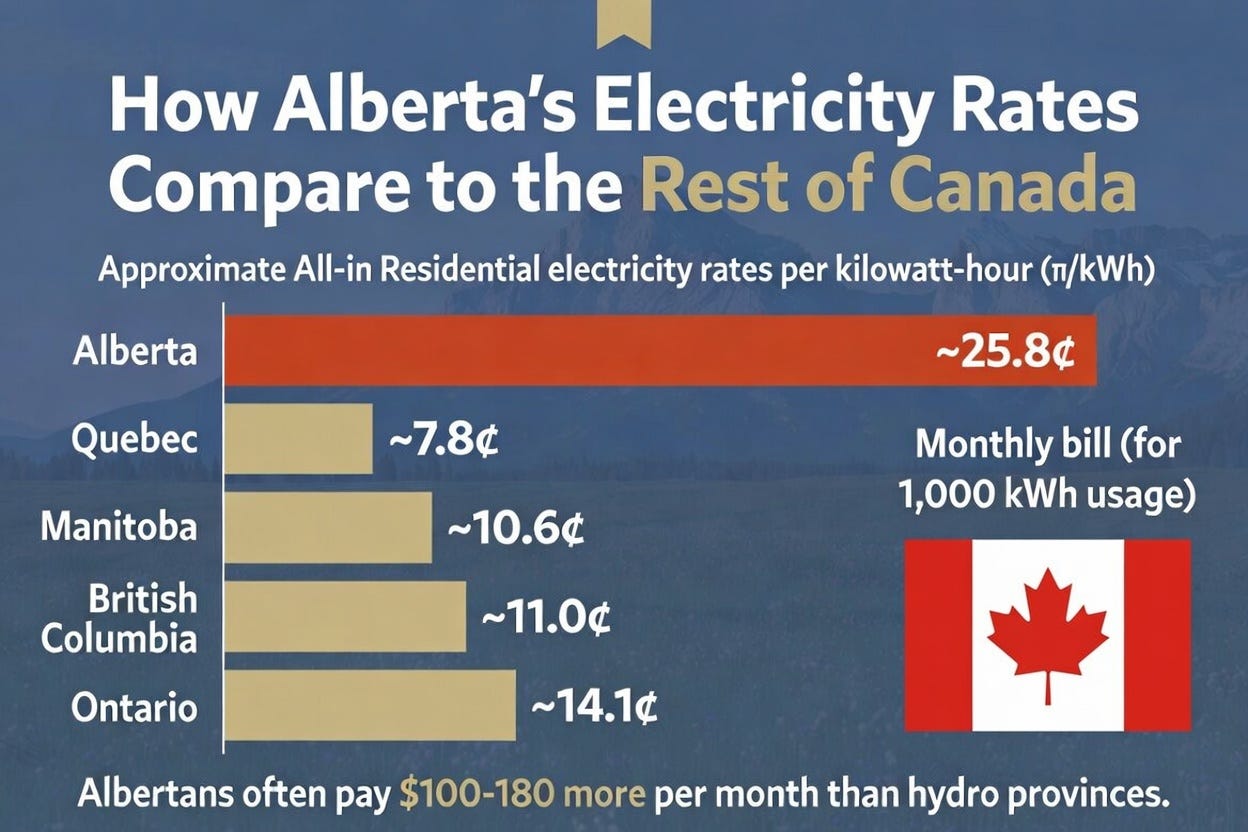
Albertans often pay $100–180 more per month than households in hydro-rich provinces. Legacy hydroelectric dams in Quebec, Manitoba, and BC give them a massive structural advantage that Alberta simply doesn’t have.
The Case for a Balanced Energy Mix
Alberta has world-class wind and solar resources and abundant, reliable natural gas. Relying too heavily on either creates problems:
· Renewables alone: Cheap when the wind blows or sun shines, but intermittent — especially during Alberta winters.
· Gas alone: Reliable and dispatchable but exposed to fuel-price swings and higher long-term marginal costs.
A smart mix wins for Albertans because it delivers:
· Lower and more stable wholesale prices (renewables bid near $0 and displace expensive gas).
· Reliability during cold snaps and peak demand (gas ramps up quickly).
· Better hedging against volatility as electricity demand grows from data centres, industry, and electrification.
· Economic growth and jobs without sacrificing affordability.
Independent modelling consistently shows diversified portfolios (gas + wind/solar + storage/transmission upgrades) keep future bills lower than a gas-heavy path. The moratorium slowed cheap new supply at the exact time Alberta needs more power, not less.
Environmental Impacts: Climate Change and Methane:
Alberta’s electricity sector has made major progress on emissions — down 60% since 2005 and 53.6% since 2015 — largely by phasing out coal and adding renewables alongside more efficient natural gas plants. In 2023, electricity emissions were roughly 19.2 Mt CO₂e.
Methane reductions from the broader oil & gas sector have been impressive: Alberta has cut upstream methane emissions by ~51-52% since 2014 (well ahead of the 45% 2025 target), even as production grew. This is among the fastest large-scale methane cuts globally.
A balanced energy mix supports continued climate progress:
· Renewables further lower the grid’s emissions intensity when they displace higher-emitting generation.
· Natural gas (with carbon capture where viable) provides the firm power needed while producing roughly half the CO₂ of coal.
· Ongoing methane regulations and technology continue to drive down potent short-lived climate pollutants.
Note on data: These figures come from official inventories (ECCC National Inventory Report and AER). Some independent studies using direct measurements suggest inventories may underestimate actual methane emissions (particularly midstream and end-use), though Alberta’s reported reductions remain substantial and verifiable through regulation and industry action.
The moratorium slowed new renewable additions, which modestly delayed further emission reductions in the power sector. However, pragmatic diversification with strong environmental safeguards (reclamation rules, methane controls, and targeted CCUS? 👈 (questions around effectiveness) offers the best real-world path: affordable reliable power and meaningful emissions intensity improvements without wrecking the economy that funds Alberta’s prosperity.
Conclusion:
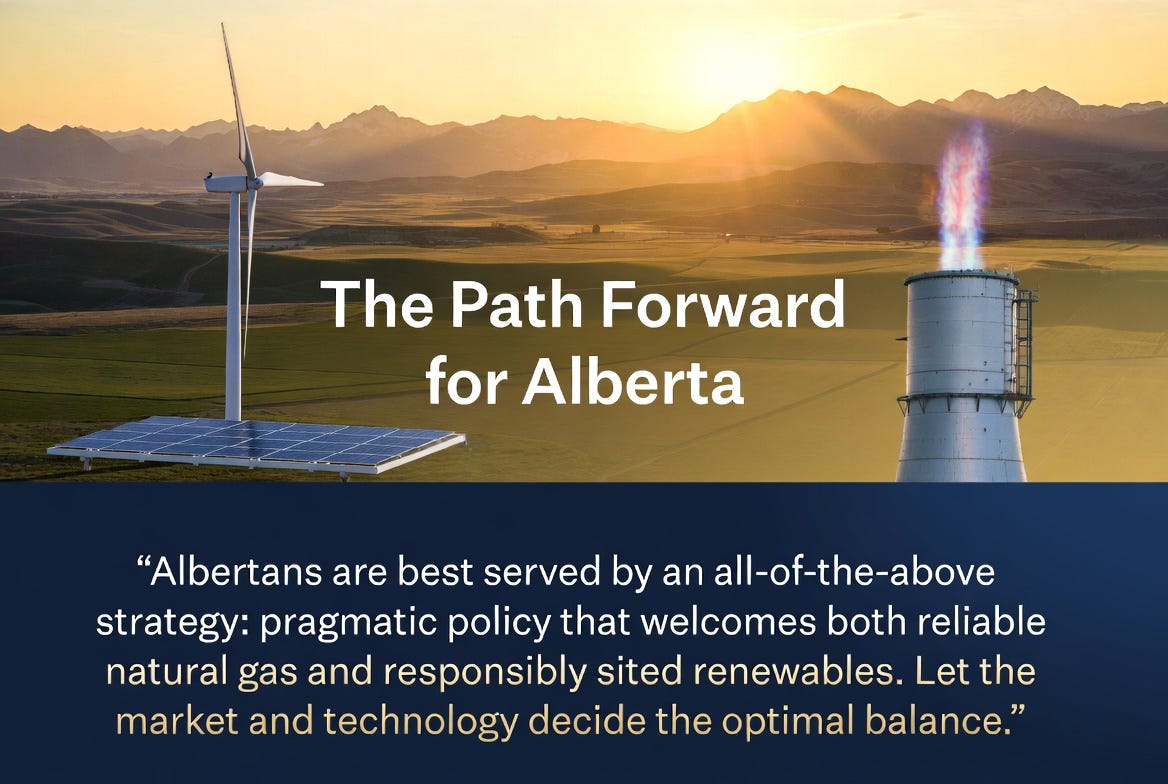
The renewable moratorium brought short-term stability through new gas plants, but it also cooled investment in low-marginal-cost renewables that help suppress prices over time. Albertans are best served by an all-of-the-above strategy: pragmatic policy that welcomes both reliable natural gas (with emissions reductions where economic) and responsibly sited renewables. Let the market and technology decide the optimal balance — with clear rules on grid reliability, reclamation, and local impacts.
Affordable, reliable power isn’t a left or right issue. It’s an Alberta issue. A balanced mix leverages our greatest strengths and protects families, farmers, and businesses from unnecessarily high bills in the years ahead.
What are your thoughts? Should Alberta double down on gas, accelerate renewables with better rules, or stick to the current path? Drop a comment below.
Sources include AESO data, Utilities Consumer Advocate, Alberta government reports, Environment and Climate Change Canada (ECCC) National Inventory Report, Alberta Energy Regulator (AER) methane data, independent energy analyses, and peer-reviewed studies on methane measurement. Rates approximate as of early-mid 2026 and vary by plan and usage — shop around!
My 2cents. Alberta should quit pandering to project 2025 and the oil and gas industry. Our planet needs more renewables not less
Like most businesses, risk increases when 'all your eggs are in one basket'. Lifecycle of each option should be taken into account as well. Should the construction of Data Centres increase, power consumption increases a hundred fold. That may elicit competition for power? Certainly water. Perhaps seeking to power individual residential & commercial properties with solar & some back-up? That could also eliminate those high admin fees and expensive infrastructure distributing power?