Alberta's Sovereignty Push: Challenging International Law and Its Impact on Treaty Agreements.
Provincial Power vs. Sacred Promises: How Alberta's International Agreements Act Threatens Treaty Rights.

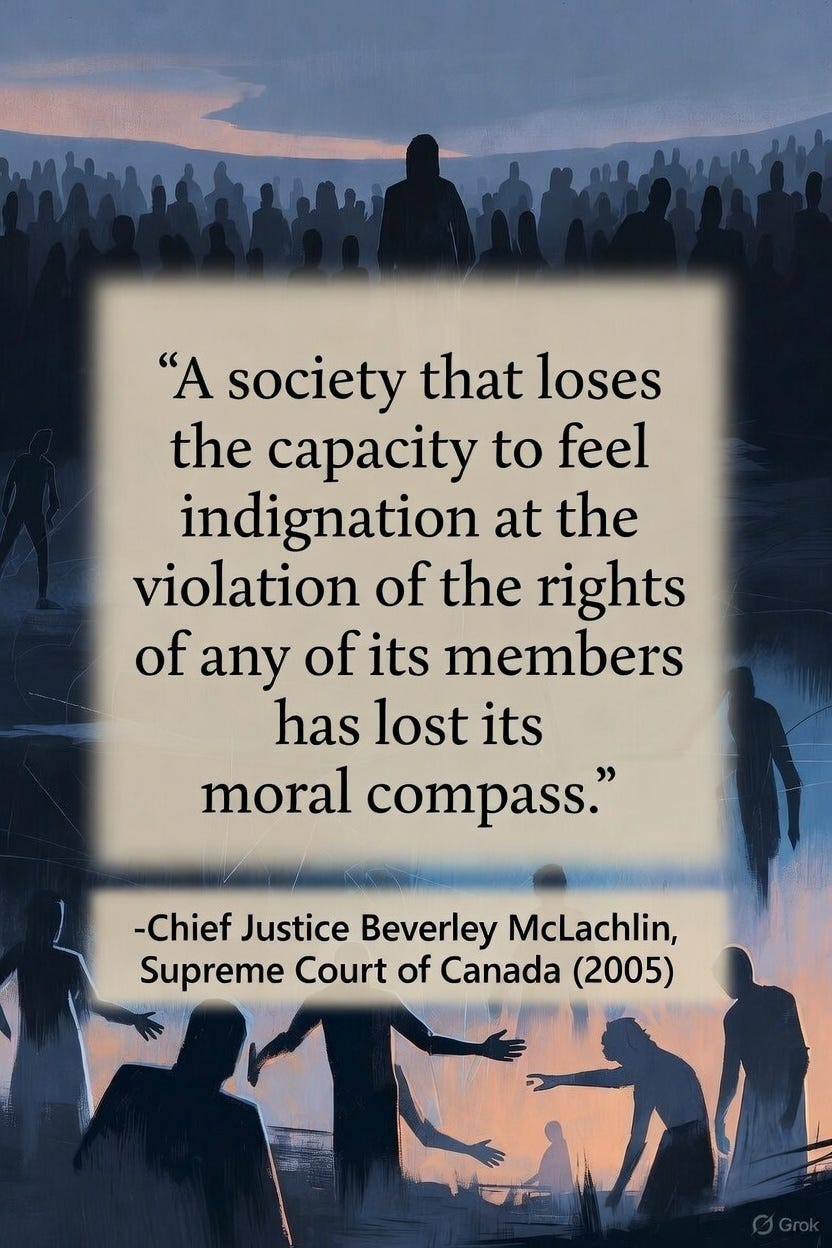
In no way do I presume to speak for any First Nations, Treaty partners, or Indigenous communities in Alberta or across Canada—this statement and my work reflect my own perspective as a non-Indigenous advocate. My role is one of steadfast support, active allyship, and unwavering commitment to upholding the principles of free, prior, and informed consent, meaningful reconciliation, and respect for the inherent rights of Indigenous Peoples. I recognize and honour the sovereign and enduring rights of First Nations to their traditional lands, waters, and environments—rights that predate colonial structures and that we all share responsibility to protect and steward together. It is through this lens of humility, learning, and solidarity that I engage in these discussions, always guided by the voices and leadership of those whose territories and Treaties form the foundation of this place we call home.
In recent years, Alberta’s United Conservative Party (UCP) government under Premier Danielle Smith has pursued policies emphasizing provincial autonomy, often framing them as defenses against federal and international overreach. This agenda has sparked significant controversy, particularly regarding its implications for historic Treaty agreements with First Nations and Canada’s commitments under international law, such as the United Nations Declaration on the Rights of Indigenous Peoples (UNDRIP). At the heart of this tension is the International Agreements Act, enacted in late 2025, which allows Alberta to challenge or refuse enforcement of federal-signed international pacts in areas of provincial jurisdiction. Critics, including First Nations leaders, argue this legislation undermines Treaty obligations and fosters division.
This article examines the UCP’s resolutions from its 2025 Annual General Meeting (AGM), the details of the International Agreements Act, and the strong backlash from Alberta’s Treaty Chiefs, highlighting how these developments intersect with constitutionally protected Treaty rights and international norms.
Historical Context: Treaty Agreements and International Law in Alberta:
Alberta’s landscape is defined by Treaties 6 (1876), 7 (1877), and 8 (1899)—nation-to-nation agreements between First Nations and the Crown, signed long before Alberta became a province in 1905. These Treaties guaranteed Indigenous rights to lands, resources, education, and self-governance “as long as the sun shines, grass grows, and rivers flow.” They are enshrined in Section 35 of Canada’s Constitution Act, 1982, making them part of the supreme law of the land. Provinces like Alberta must respect these rights, including duties to consult and accommodate First Nations on matters affecting them.
Internationally, these Treaties gain additional weight through UNDRIP, adopted by the UN in 2007 and implemented in Canadian federal law in 2021. UNDRIP emphasizes free, prior, and informed consent (FPIC) for developments on Indigenous lands and supports modern interpretations of Treaty rights, including resource sharing and co-management. While not directly binding, UNDRIP influences Canadian jurisprudence and is invoked in disputes over land and resources. For Alberta’s Treaty territories, this international framework bolsters claims that provincial actions cannot unilaterally override Crown commitments.
UCP’s 2025 AGM: Resolutions Targeting International Overreach:
The UCP’s November 2025 AGM in Edmonton saw members pass all 35 proposed policy resolutions, many reflecting grassroots demands for greater sovereignty. Two resolutions stand out for their direct relevance to Treaty agreements and international law:
1. Defending Provincial Jurisdiction Over International Matters: This resolution urges the government to assert Alberta’s authority against international emergencies, treaties, or agreements impacting provincial areas like natural resources, health, education, and security. It positions Alberta as a gatekeeper, potentially allowing the province to ignore federal commitments if deemed harmful to Albertans.
2. Protecting Crown Lands from UNDRIP Interpretations: Explicitly targeting UNDRIP, this resolution calls for safeguarding Alberta’s Crown lands from unlawful seizure by international or federal bodies through neocolonial interpretations of the declaration. It claims such interpretations could lead to land transfers to First Nations followed by international reclamation, while affirming that Treaty spirit and intent should only be revised through negotiation.
These resolutions, now part of the UCP’s Member Policy Declaration, signal a broader agenda to prioritize provincial interests over federal or international obligations. While non-binding on government, they have influenced legislation and rhetoric, drawing parallels to earlier UCP moves like the 2022 Alberta Sovereignty Act.
The International Agreements Act: Legislation to Challenge Federal Pacts:
Building on AGM priorities, Premier Smith introduced Bill 1, the International Agreements Act, on October 23, 2025. The Act received Royal Assent on November 26, 2025, and came into force immediately. Its core provision requires that any federal international agreement touching on provincial jurisdiction—such as health, education, or resources—must be implemented via Alberta legislation to be enforceable in the province.
Smith described the Act as a common-sense measure to ensure decisions that impact Alberta are made in Alberta, drawing inspiration from Quebec’s approach to international relations. The Act could apply to UNDRIP-related commitments or other pacts like WHO health treaties or climate accords, potentially allowing Alberta to opt out if they conflict with provincial priorities.
Legal experts warn the Act risks constitutional challenges, as provinces cannot unilaterally void Canada’s international obligations. It has also been linked to broader UCP efforts, including invocations of the Charter’s notwithstanding clause, raising concerns about eroding rights protections.
Bill 14: Overriding Judicial Rulings and Paving the Way for Separatist Referendums:

A pivotal development in Alberta’s sovereignty agenda came with the passage of Bill 14: Justice Statutes Amendment Act, 2025, introduced by Justice Minister Mickey Amery on December 4, 2025, and receiving Royal Assent on December 11, 2025. This sweeping legislation amended multiple acts, including the Citizen Initiative Act, Referendum Act, and others, fundamentally altering the rules for citizen-led petitions and referendums.
Key changes included:
· Transferring authority from the independent Chief Electoral Officer to the Minister of Justice to decide whether citizen initiative petitions can proceed, including whether to refer questions to the courts.
· Removing safeguards that previously required referendum questions to be constitutional, factually accurate, not contravene the Charter of Rights and Freedoms, respect First Nations Treaty rights, or stay within provincial jurisdiction.
· Discontinuing ongoing court proceedings related to these requirements, effectively halting judicial reviews of proposed questions.
· Applying some changes retroactively, which reset or nullified certain active petitions.
These amendments came at a critical moment. Just one day after Bill 14’s introduction, Justice Colin Feasby of the Alberta Court of King’s Bench ruled that a proposed separatist referendum question from the Alberta Prosperity Project—”Do you agree that the Province of Alberta shall become a sovereign country and cease to be a province of Canada?”—was unconstitutional. The judge held that the existing Citizen Initiative Act did not empower citizens to initiate referendums on matters that would infringe on constitutional rights, including Section 35 Treaty rights and the Charter. He emphasized that such a question would impair First Nations’ ability to exercise their Treaty rights and violate the rule of law.
Bill 14’s passage effectively circumvented this ruling by removing the constitutional barriers and judicial referral process that had blocked the petition. Separatist advocates hailed it as a victory for “democratic reform” and “removing gatekeepers,” while critics—including judges, legal experts, opposition parties, and First Nations—condemned it as an erosion of judicial independence, the separation of powers, and protections for Indigenous rights.
First Nations leaders expressed profound alarm. The Confederacy of Treaty No. 6, Treaty 7 G4 Nations (Tsuut’ina, Bearspaw, Chiniki, and Goodstoney), Sturgeon Lake Cree Nation, Piikani Nation, and others argued that the bill enables unconstitutional questions that threaten Treaty relationships. They noted that Alberta’s existence and borders stem from Crown-First Nations Treaties predating the province, and any separation would require Indigenous consent—something Bill 14’s changes do not ensure. Multiple First Nations launched or joined legal challenges, asserting that the legislation itself violates constitutional norms and Treaty obligations by sidelining oversight that protects Section 35 rights.
This move amplified tensions already evident in the UCP’s AGM resolutions and the International Agreements Act, reinforcing perceptions that provincial autonomy efforts prioritize political goals over foundational Crown-Indigenous commitments and the broader Canadian constitutional framework.
First Nations Backlash: Non-Confidence and Calls for Unity:
Chiefs call on Alberta to nip separatist movement. The Canadian Press
The UCP’s agenda has provoked a unified response from Alberta’s First Nations. On February 26, 2026, the Assembly of Treaty Chiefs (representing Treaties 6, 7, and 8) passed a unanimous vote of non-confidence in the UCP government—the first such action in its history. Chiefs cited the government’s failure to uphold Treaty-based constitutional and governance responsibilities, promotion of separatism, and creation of unsafe conditions for Indigenous peoples through ignorance and intolerance.
Treaty 6 Grand Chief Joey Pete stated that the UCP government has created conditions in Alberta that are unsafe for First Nations peoples—promoting ignorance and intolerance along with its support for the separatist agenda is leading to outright racism. Treaty 8 Grand Chief Trevor Mercredi added that the growing climate of division and separation is a direct result of its failure to respect Treaty Rights. Tsuut’ina Nation Head Chief Ellery Starlight emphasized the unconstitutional exercise to separate Alberta from the Crown.
On March 9, 2026, Indigenous leaders rallied at the Alberta Legislature, urging the UCP to quash separatism and expressing disappointment over the government’s opposition to an NDP motion for a non-confidence vote on its handling of the issue. This follows earlier criticisms of UCP resolutions as undermining UNDRIP’s role in advancing Treaty rights.
Alberta Treaty Chiefs come down on UCP government as non-confidence motion shot down. CityNews
Recent Developments: Federal-Provincial Thaw?
Amid tensions, a potential olive branch emerged on March 6, 2026, when Prime Minister Mark Carney and Premier Smith announced an agreement-in-principle to streamline major project approvals in Alberta. The draft Co-operation Agreement on Environmental and Impact Assessment aims for a one project, one review process, accelerating construction while ensuring the rights of Indigenous communities are respected. A 21-day consultation period, including funding for Indigenous participation, is underway. This could signal de-escalation, but it remains unclear how it aligns with the International Agreements Act or addresses Treaty concerns.
Implications for Alberta’s Future:
The UCP’s efforts to challenge international law through legislation like the International Agreements Act represent a bold assertion of provincial power, but they risk deepening rifts with First Nations and the federal government. For Treaty partners, these moves threaten the foundational Crown-Indigenous relationship, potentially leading to legal battles and economic uncertainty. As Alberta navigates these waters, the call from Treaty Chiefs for unity underscores a pivotal moment: balancing provincial ambitions with constitutional and international obligations that predate the province itself. With ongoing consultations and legislative sessions, the coming months will reveal whether dialogue prevails over division.
It is now time for all Albertans—Indigenous and non-Indigenous alike—to take meaningful action. As Treaty people sharing this land, we must stand together to reject division, support the voices of Treaty Chiefs who have called for an end to separatist rhetoric and renewed respect for Treaty rights, and demand leadership that fosters reconciliation rather than discord. Whether through civic engagement, supporting inclusive dialogue, contacting elected officials, or amplifying calls for unity, every Albertan has a role in ensuring our shared future is built on mutual respect, constitutional integrity, and the enduring spirit of the Treaties. The path forward lies not in separation, but in solidarity—let us choose dialogue, accountability, and collective stewardship of this place we all call home.
The End
Sources:
· Government of Alberta: International Agreements Act (Bill 1) overview and status (alberta.ca/protecting-provincial-jurisdiction).
· Assembly of Treaty Chiefs: Press release on unanimous non-confidence vote in UCP government (February 26, 2026; treaty8.org and confederacy of Treaty Six Nations statements).
· CBC News: Coverage of First Nations chiefs’ non-confidence vote (February 28, 2026) and federal-provincial agreement-in-principle (March 6, 2026).
· Calgary Herald: Report on Assembly of Treaty Chiefs’ non-confidence vote (February 27, 2026).
· The Tyee: Article on Alberta First Nations chiefs calling for end to UCP government (March 5, 2026).
· Prime Minister of Canada: News release on Canada-Alberta Co-operation Agreement (March 6, 2026; pm.gc.ca).
· Alberta Legislative Assembly: Bill 1 (International Agreements Act) text and Royal Assent details (assembly.ab.ca).
· Various reports on UCP 2025 AGM resolutions (including those on UNDRIP and provincial jurisdiction; drawn from party policy declarations and media summaries).